UFPAC logo, French association of people living with a heart assist device UFPAC
FR EN ES
UFPAC logo UFPAC
Research
Clinical trial

CorWave, a French company based in Clichy, carried out the world's first implantation of its new type of pump in Sydney in July 2025: instead of a spinning rotor, a flexible membrane undulates and pushes blood in pulses, like a heart, speeding up during exertion.

Source: Cardiovascular Business
All information on this site is for guidance only — it does not replace advice from your doctor or care team.
FR EN ES
Research
Clinical trial

CorWave, a French company based in Clichy, carried out the world's first implantation of its new type of pump in Sydney in July 2025: instead of a spinning rotor, a flexible membrane undulates and pushes blood in pulses, like a heart, speeding up during exertion.

Source: Cardiovascular Business
Union Française des Porteurs d'Assistance Cardiaque
Living with a heart assist device, with a community by your side

We are a group of LVAD patients and carers, brought together by a conviction born of our own experience: sharing experiences, difficulties, resources and hopes makes all the difference. UFPAC supports people living with a heart assist device — past, present or future — and those close to them.

UFPAC association logo
≈ 400 LVAD patients in France: a rare community that deserves to be heard
2026 UFPAC is founded, with a national reach
Toulouse Rangueil University Hospital Toulouse — where it all began, among patients and carers
1901 Act non-profit association — RNA W313042112
Our aims

Three commitments to people living with a heart assist device and those close to them.

Support

Supporting, in the broadest sense, people living with a heart assist device — past, present or future — as well as carers and loved ones.

Build connections

Building and maintaining links with organ and tissue donation associations, because our journeys are closely tied to theirs.

Inform

Helping to explain medical issues in plain language and to inform the public about ventricular assist devices.

Our story

A human story that began in the corridors of Toulouse Rangueil, an implanting university hospital.

Like most patients and their carers, we have been through difficult times. Through informal meetings, we learned to accept our life as people who are “permanently plugged in”. These exchanges brought us closer together and allowed us to share our experiences.

THE BEGINNINGS

Informal meetings between patients

LVAD patients and their carers meet at Toulouse Rangueil, an implanting university hospital, talk, and discover the strength of sharing experiences, difficulties, resources and hopes.

JUNE 2026

UFPAC is officially founded

The Union Française des Porteurs d'Assistance Cardiaque is registered with the Haute-Garonne prefecture and published in the Journal Officiel. From the outset, it sets out its national ambition: to build local groups of committed patients and carers in every implanting university hospital.

TOMORROW

Why not write the next chapter with us?

Our community numbers only around 400 patients in France, who are still under-represented at national level. Coming together strengthens our credibility with the institutions. To do this, we need you.

Understanding

What is a ventricular assist device?

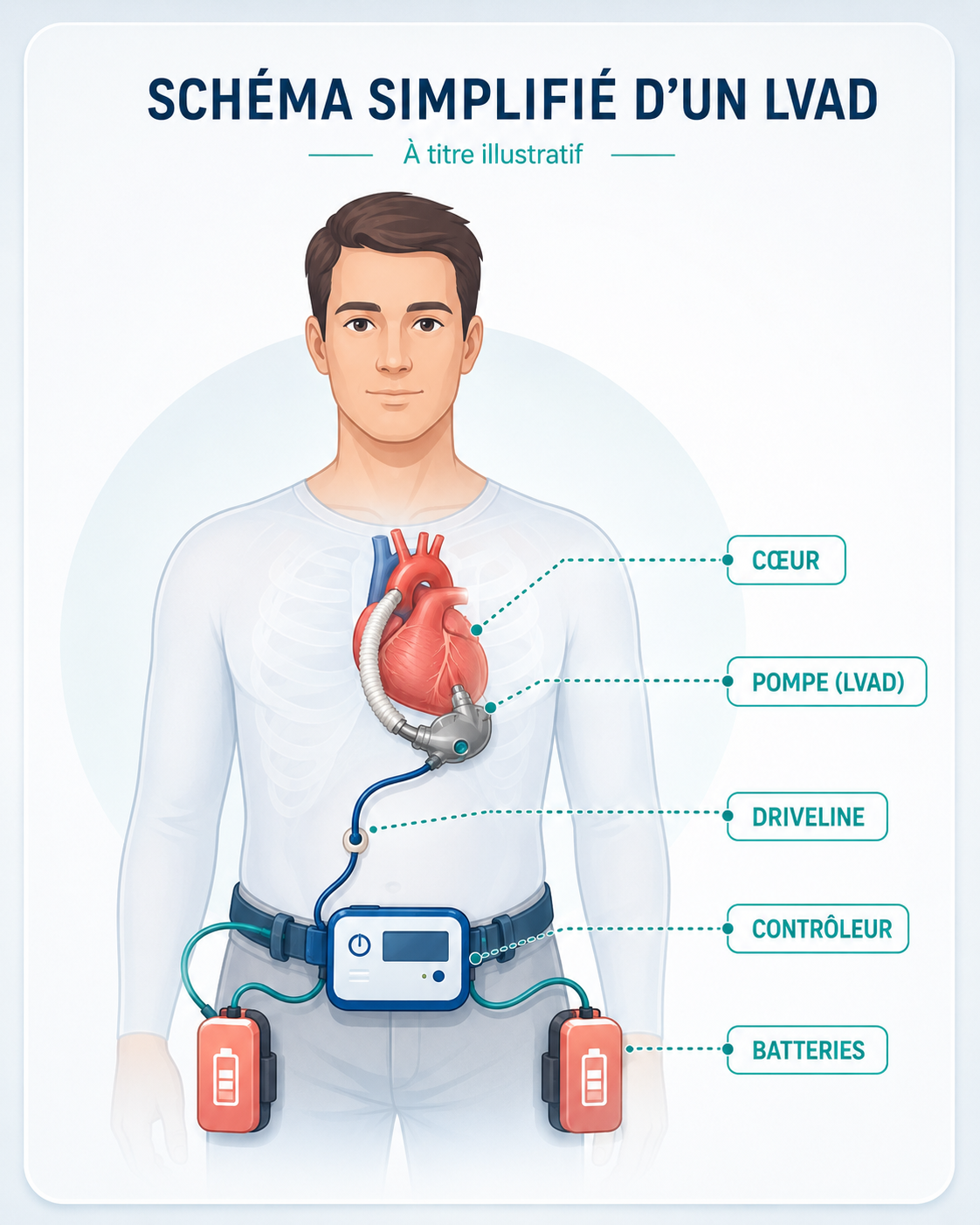
A left ventricular assist device (LVAD) is an implanted pump that helps a weakened heart circulate blood when the heart alone can no longer do so well enough. It does not replace the heart: it assists it.

01 The pump is connected by a cable (the driveline) to an external controller and to batteries that the patient wears at all times — hence our expression “permanently plugged in”.
02 Depending on the situation, the device may be implanted while waiting for a heart transplant, or as a long-term solution.
03 Daily life revolves around managing the batteries, regular medical follow-up and caring for the cable exit site.
04 With the right support, many patients return to an active life: this is the experience UFPAC wants to pass on.
Simplified LVAD diagram: heart, pump, driveline, controller and batteries

Illustrative medical diagram — may not be suitable for sensitive viewers.

Implanting centres

Where heart assist devices are implanted around the world

Click on a centre in the list to locate it on the map.

Work in progress — the list of centres and their contact details are updated regularly.

Indicative list of the main centres offering ventricular assist devices, to be completed and checked. The numbers given are the hospitals' main switchboards, for information only and to be checked before use: they are not direct lines to the heart assist department. For any medical question, always contact your usual follow-up centre.

The founding team

Patients, carers, a transplant recipient: journeys that speak to yours.

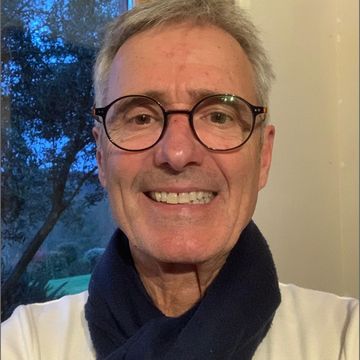
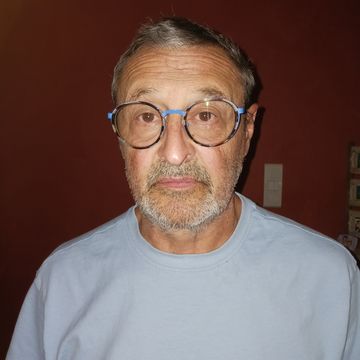
Jean-Louis Boulet

Jean-Louis Boulet

LVAD patient — President
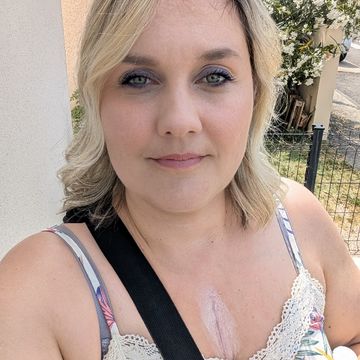
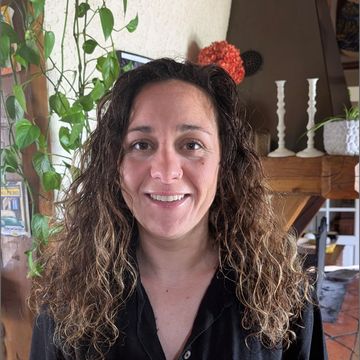
Aurore Rousseau

Aurore Rousseau

LVAD patient — Secretary
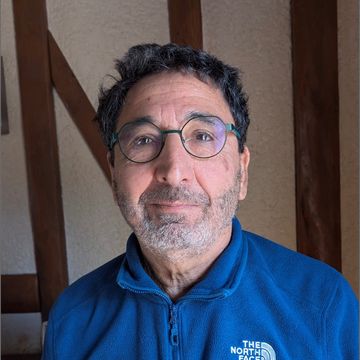
Bernard Garcia

Bernard Garcia

LVAD patient — Treasurer
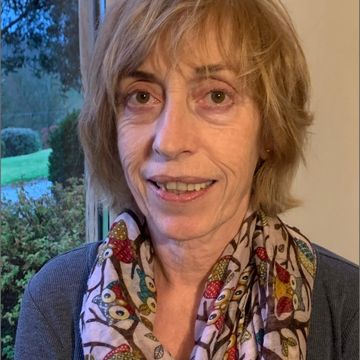
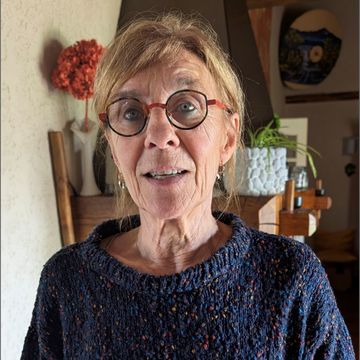
Bernadette Boulet

Bernadette Boulet

Carer
Marion Garcia

Marion Garcia

Carer — Vice-President
Françoise Garcia

Françoise Garcia

Carer
Pascal Coppo

Pascal Coppo

Transplant recipient — former LVAD patient
François Farine

François Farine

LVAD patient — Deputy Secretary
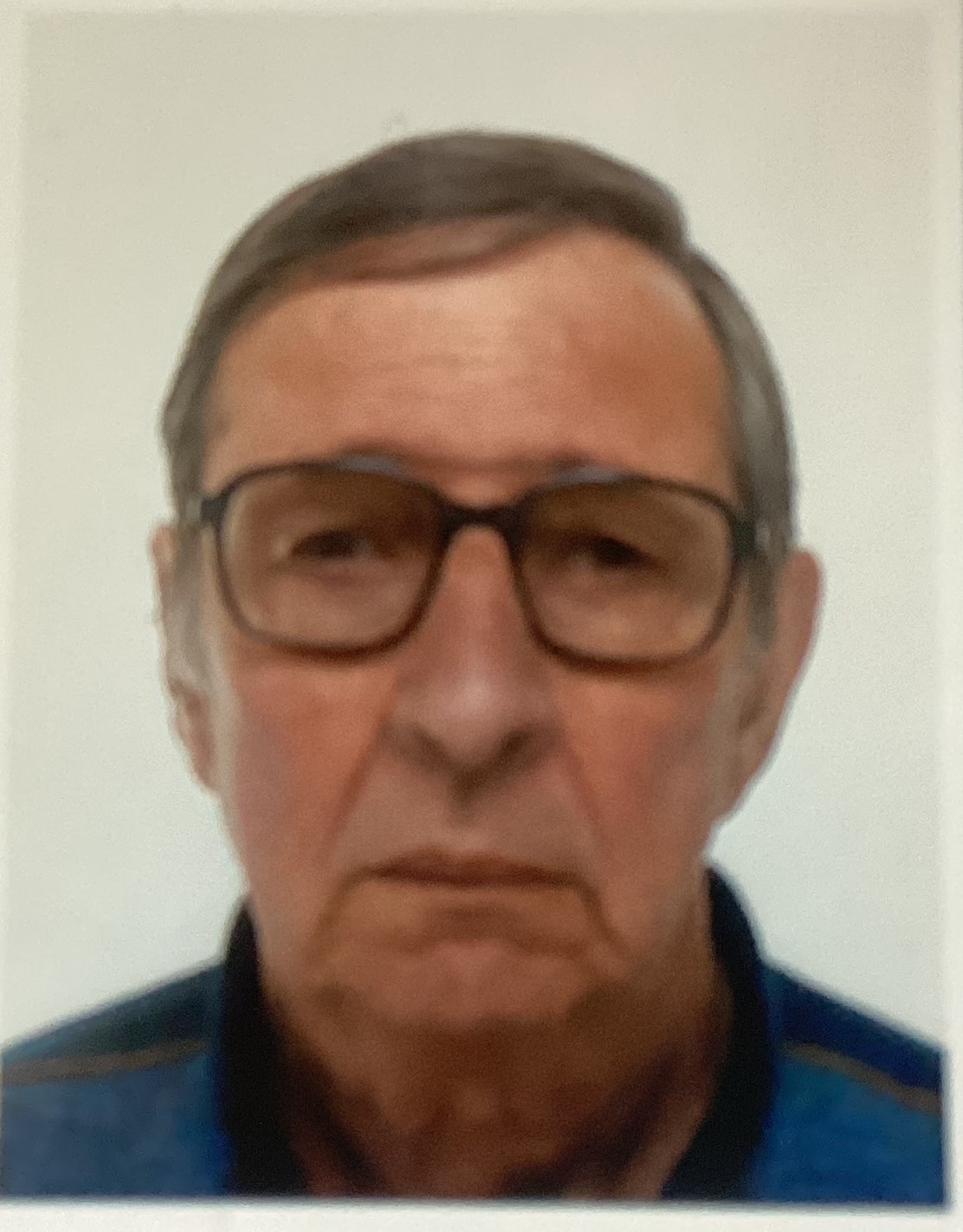
Michel Sabatté

Michel Sabatté

LVAD patient
Partner
Logo OTRA VISION

Clothing designed for wearing the external parts of a heart assist device every day, tested and approved by patients.

Visit the shop
Support & contact

Support UFPAC — every gesture counts.

Patient (current, future or former), carer, loved one, healthcare professional or supporter: there is a place for you at UFPAC.

20 € Individual membership
for one year
30 € Couple membership
for one year
1

I fill in the form

Right below, in a few minutes, without leaving this page.

2

I pay securely

Card payment via HelloAsso, the trusted platform for French associations.

3

I receive my confirmation

A welcome email and your membership receipt are sent automatically.

Online membership is coming very soon!

In the meantime, you can join by post using the form below,
or write to us at contact.ufpac@gmail.com — we will be happy to help.

Donate

Support UFPAC with a donation

Please note: this button is not for joining. It is only for making a one-off donation, without becoming a member and without creating an account. You will not be asked to pay anything afterwards. Every donation, however small, funds our information work and our presence alongside patients and their loved ones. Secure payment via HelloAsso.

To join the association, use the form just above, or the paper form below.

Donate

Secure payment on HelloAsso (page in French).

Hacer un donativo

Pago seguro en HelloAsso (página en francés).

Prefer paper? No problem.

Download the form (in French), fill it in at home at your own pace, and send it back with your payment (cheque payable to UFPAC) to:

Mr Bernard Garcia — UFPAC Treasurer
79 Chemin de la Maladrerie
31410 Noé

Download the membership form

Any questions? Write to us.

contact.ufpac@gmail.com
Our mailbox is checked by volunteers. We reply to everyone.
UFPAC
21 rue du Béarn
31700 Mondonville
Videos & Tutorials
Learn by watching, move forward together

Patient testimonials and practical tutorials for everyday life — such as changing the dressing. The videos play right here, without leaving the page. Please note: all videos are in French.

To start

What is a heart assist device?

A general overview of the device, in a few minutes (in French).

How a heart assist device works

An overview of the device and how it works.

Testimonials

Journeys like yours

Because nothing speaks louder than shared experience, listen to those who live with a heart assist device.

Living with a heart assist device

Daily life with an LVAD, told by someone who lives it.

A patient's journey

The story of a journey with a heart assist device, from implantation to life regained.

Patients and loved ones speak

What a heart assist device changes, for the patient and for those around them.

Our thanks to Nantes University Hospital for producing and sharing these testimonial videos.

Read and share a written testimonial
Tutorials

Everyday care, step by step

Practical tutorials for everyday life with a heart assist device.

The tutorial is coming soon

The video on changing the driveline dressing is being prepared.

These videos do not replace your care team's instructions: if in doubt, always contact your reference centre.

Everyday life

Everyday tips and tricks

What people living with a heart assist device and their carers have learned over time: the habits that make the day easier, the ones that reassure, and the ones we wish we had known from day one.

Where do these tips come from? They bring together the experience of patients and carers, as well as documents published by care teams where these exist — the source is then cited under the relevant section. They never replace the instructions of your implanting centre: if in doubt, those instructions always take precedence.

01

Showering

  • •The shower bag provided by your centre is essential: the controller and batteries cannot withstand water otherwise.
  • •Keep the equipment away from the spray, even when protected — splashes get where you least expect them.
  • •Many patients change the dressing right after showering: the site is clean and dry, so it is the best time.
  • •Have everything you need ready in advance, within reach, before you start.
02

Sleeping

  • •On your back, or on the side opposite the cable exit. Avoid sleeping on your stomach: it puts pressure on the driveline.
  • •Extra pillows support the body and stop the cable from pulling during the night.
  • •A dedicated night belt holds the controller and batteries: no more waking up to readjust them.
  • •The fear of pulling out the cable while asleep is very common at first, and it fades. Talk to your team if it keeps you awake.
03

Carrying the equipment

  • •Shoulder bag, belt, vest, harness: try several options, as none suits everyone.
  • •A shoulder bag spreads the weight better; a belt is more discreet but can feel tight.
  • •Loose clothing, button-up or zip-up shirts: access to the equipment becomes much easier. Our partner OTRA VISION offers clothing designed for exactly that.
  • •The equipment can be worn very discreetly. Some women run the cable into a handbag, and no one can tell.
04

Protecting the cable

  • •A driveline stabiliser prevents pulling — the leading preventable cause of infection.
  • •Check the exit site every day for redness, swelling, discharge or new pain.
  • •Fever or a change in the appearance of the site: call your care team, without waiting for your next appointment.
  • •A dressing using a sterile technique, at the frequency set by your centre — this is what protects you most.
05

Going out

  • •The spare battery set and the backup controller never stay at home.
  • •Keep your list of emergency contacts, including your implanting centre, on you at all times.
  • •Take what you need to change a dressing: the unexpected happens.
  • •Your medication, in a pill organiser.
Download my going-out checklist
06

Alarms

  • •An alarm is not necessarily an emergency. Look at the screen first: the message tells you what to do.
  • •First reflex: check that the cable is properly connected and that two power sources are plugged in.
  • •Yellow = needs attention. Red = act immediately. Never ignore a red signal.
  • •The first alarm frightens everyone. Once you understand the system, the panic goes away.
07

Medication and diet

  • •The vitamin K in green vegetables interacts with warfarin: there is no need to cut them out, but eat them regularly, without big variations.
  • •Report any new medicine, including antibiotics: your INR may change.
  • •Blood pressure needs monitoring: if it is too high, it hinders the pump.
  • •Pulse and blood pressure are difficult to measure in the usual way — this is expected, and something to tell every healthcare professional.
08

Wellbeing

  • •Anxiety and low mood after implantation are common. They are not a failure, and they can be treated.
  • •Patients regularly mention patient and carer groups as the most helpful support — this is UFPAC's reason for being.
  • •Lean on your loved ones. They need support too.
  • •Professional psychological support has its place in your care.
09

Travelling by air

  • •Air travel is not forbidden for LVAD patients, but it must be planned with your team: they are the ones who give the go-ahead.
  • •Charged spare batteries travel in the cabin, accessible at all times, and are checked before boarding.
  • •Keep the documents provided by your centre (medical letter, department contact details) on you, translated into the local language if possible.
  • •Before you leave, get in touch with an LVAD reference centre at your destination.
  • •Bring a complete medical file: letters, a recent ECG, prescriptions using international non-proprietary names (INN), and extra medication within reach during the flight.
  • •Drink enough and avoid coffee during the journey.
  • •Before booking, check that you have travel insurance with medical assistance and repatriation.
  • •Declare your equipment at security: ask for a manual pat-down rather than the scanner.

Source: Voyages en avion — Contre-indications cardiovasculaires (in French), cardiology team at CHU de La Réunion (École Numérique de Cardiologie), updated 18 March 2025.

What patients say

The observations that come up most often

“It becomes routine”

The most widely shared experience: what seems overwhelming in the first weeks eventually becomes part of everyday life. Managing the equipment becomes second nature.

“You can return to an active life”

Many patients return to work, travel and take up suitable physical activity again. Contact sports and high-impact activities remain off-limits.

“Having a backup plan changes everything”

Charged batteries, a backup controller, phone numbers within reach: being prepared is what lets you live without being on constant alert.

“The right equipment makes the difference”

Suitable clothing, a night belt, a cable stabiliser: these practical details are what make days and nights comfortable.

“Talking to someone who is going through the same thing”

Exchanges between patients are described as decisive support — something no brochure can replace, and what UFPAC aims to organise in every implanting university hospital.

Have a tip to share?

This page is meant to grow with feedback from patients and carers. Write to us and we will add your tip.

Suggest a tip

Lived experiences gathered from resources for people living with a heart assist device and their carers. They are not medical guidelines: every situation is different, and your care team remains your only reference.

Their stories

In the words of patients and carers

Every journey is different. These testimonials are published with their authors' consent, after review by the association.

Share my story

Loading testimonials…

The first testimonials are coming soon

You can be the first to share yours, just below.

{{ t.texte }}

{{ t.prenom }}
{{ t.sousTitre }}
{{ t.role }}

Share my story

Your text will be read by the association before it is published. You can stay discreet by giving only a first name.

You are

Please do not give medical advice or information about another person. UFPAC reserves the right not to publish a testimonial or to correct its spelling.

Sending failed. Please check your connection and try again.

Thank you for your story

We have received it. It will be published on this page after review by the association.

Outside France

LVAD rights and benefits by country

Living with an LVAD outside France? Here is a short, practical overview of the main benefits and procedures in each country, with links to the official websites.

Tap a country to see the details.

United StatesSocial Security · Medicare · air travel
  • Social Security lists “ventricular assist device recipient” among its Compassionate Allowances: disability claims from LVAD patients are flagged for faster processing.
  • There are two programmes: SSDI, if you have worked and paid Social Security taxes long enough, and SSI, for people with limited income and resources.
  • SSDI payments usually start after a five-month waiting period. Medicare coverage is added after two years of disability benefits.
  • Medicare covers LVADs that meet its national coverage criteria.
  • Flying: tell the TSA officer about your device before screening. You can call TSA Cares at least 72 hours before travelling: 855-787-2227.
  • Driving rules depend on your state: contact your state DMV.

Official sources

United KingdomPIP · Blue Badge · driving
  • Personal Independence Payment (PIP) helps with the extra costs of a long-term condition, from age 16 to State Pension age. It is not means-tested: your income and savings do not count.
  • To claim PIP, you must have needed help for at least 3 months and expect to need it for at least 9 more. Over State Pension age, Attendance Allowance applies instead.
  • The Blue Badge gives parking concessions to people with severe mobility problems. You apply through your local council.
  • Driving: the DVLA requires you to stop driving and to tell it when an LVAD is fitted. Your doctor will tell you when you may drive again.

Official sources

CanadaDisability tax credit · patient guides
  • The federal disability tax credit reduces the income tax you pay if a medical practitioner certifies a severe and prolonged impairment (form T2201).
  • Being approved for this credit also opens access to other programmes, such as the Registered Disability Savings Plan.
  • In Ontario and Quebec, the University of Ottawa Heart Institute lists financial and employment support for heart patients and publishes an LVAD patient guide.

Official sources

AustraliaDisability Support Pension · driving
  • The Disability Support Pension is financial help if your condition is likely to last more than 2 years and stops you from working. You must meet both medical and non-medical rules.
  • If you do not qualify for this pension, Services Australia may offer other payments.
  • Driving: the national Austroads standards include specific criteria for people with a ventricular assist device. Ask your cardiologist before driving.

Official sources

EspañaIncapacidad permanente · grado de discapacidad
  • La pensión de incapacidad permanente cubre la pérdida de ingresos cuando una enfermedad reduce o anula la capacidad para trabajar.
  • Hay cuatro grados: parcial, total, absoluta y gran incapacidad. El último se aplica cuando se necesita la ayuda de otra persona para los actos esenciales de la vida.
  • Se solicita en la sede electrónica de la Seguridad Social o en un centro de atención con cita previa.
  • El grado de discapacidad igual o superior al 33 % da acceso a derechos y ventajas, como reducciones en el transporte. Se pide en la comunidad autónoma donde reside.

Fuentes oficiales

ArgentinaCertificado Único de Discapacidad
  • El Certificado Único de Discapacidad (CUD) es un documento público, válido en todo el país, que acredita la discapacidad. El trámite es gratuito y voluntario.
  • Lo evalúa una Junta Evaluadora interdisciplinaria, formada por profesionales de la salud, la psicología y el trabajo social.
  • Da acceso, entre otros, a la cobertura del 100 % de las prestaciones de rehabilitación y al transporte público gratuito.
  • El trámite se inicia en argentina.gob.ar/cud, con un cuestionario que indica la documentación necesaria.

Fuentes oficiales

Estados UnidosSeguro Social · Medicare · viajes
  • El Seguro Social incluye a los portadores de asistencia ventricular en su lista Compassionate Allowances: sus solicitudes de incapacidad se tramitan con prioridad.
  • Hay dos programas: SSDI, si ha trabajado y cotizado lo suficiente, y SSI, para personas con ingresos y recursos limitados.
  • Los pagos de SSDI suelen empezar tras un periodo de espera de cinco meses. Medicare se añade después de dos años de beneficios por incapacidad.
  • En el aeropuerto, informe al agente de la TSA de su dispositivo antes del control. Puede llamar a TSA Cares al menos 72 horas antes del viaje: 855-787-2227.

Fuentes oficiales

Your rights

Rights and procedures

Healthcare coverage, income, disability recognition, driving licence: what you need to know, with the official sources to check for yourself.

Please read first: the rights below apply only to people living in France. This page describes French benefits and procedures. Each section cites the official source it is based on (in French). This information is general and may change: it does not replace advice from your health insurance fund or from the social worker at your implanting centre, who knows your situation.

¿No vive en Francia?Derechos y prestaciones en España, Argentina y Estados Unidos. Ver por país You don't live in France?Benefits and rights in the United States, the United Kingdom, Canada and Australia. See by country
01

ALD: 100% coverage

  • •Severe heart failure is on the list of long-term conditions (ALD, affections de longue durée) recognised by the French national health insurance, the Assurance Maladie. Your GP draws up the care protocol.
  • •ALD status removes the patient's share of costs (ticket modérateur): care and treatment related to your condition are reimbursed at 100% of the Social Security base rate.
  • •Please note: fees above the standard rate (dépassements d'honoraires) and the daily hospital charge (forfait hospitalier) are not covered by ALD status. Supplementary health insurance remains useful.
  • •ALD status also covers transport for care related to the condition, on medical prescription and subject to certain conditions.
  • •The protocol is valid for a limited period and must be renewed: check the expiry date in your ameli account.

Source: Affection de longue durée and prise en charge en ALD exonérante, Assurance Maladie (ameli.fr).

02

Sick leave and invalidity pension

  • •During sick leave, daily allowances are paid by the Assurance Maladie, subject to contribution conditions.
  • •When your capacity to work or earn is reduced by at least two thirds, you can apply for an invalidity pension (pension d'invalidité). It is separate from disability recognition by the MDPH: they are two independent schemes.
  • •There are three categories of invalidity, depending on whether you can still work, can no longer work, or need help from another person for everyday activities.
  • •The pension can be reviewed: it may be changed, suspended or withdrawn if your condition changes.
  • •You apply to your health insurance fund; the social worker at your implanting university hospital can help you put the application together.

Source: L'invalidité, Assurance Maladie (ameli.fr).

03

The MDPH: RQTH, AAH, PCH

  • •The departmental disability office (MDPH, Maison départementale des personnes handicapées) handles disability-related applications. A single form covers all benefits.
  • •The RQTH (official recognition as a disabled worker) gives access to workplace adjustments and employment support.
  • •The AAH (allowance for disabled adults) requires a disability rate of at least 80%, or between 50 and 79% with a substantial and lasting restriction on access to employment.
  • •The PCH (disability compensation benefit) funds costs related to loss of independence, in particular help from another person.
  • •You can apply online at mdphenligne.cnsa.fr, or on paper to the MDPH in your département. Processing takes several months.

Sources: Mon Parcours Handicap (RQTH) and MDPH en ligne, CNSA.

04

The mobility inclusion card (CMI)

  • •Since 2017, the CMI (carte mobilité inclusion) has replaced the former invalidity, priority and parking cards.
  • •The “invalidité” endorsement is granted for a disability rate of at least 80%, or a category 3 invalidity pension.
  • •If you receive funding to employ a personal assistant, the card carries the additional endorsement “besoin d'accompagnement” (companion needed), which gives your companion reduced or free fares, particularly on trains.
  • •The “priorité” (priority) and “stationnement” (parking) endorsements may be added or obtained separately, depending on your situation.
  • •Please note: old permanent invalidity cards and European parking cards will no longer be valid after the end of 2026. If you have one, apply for your CMI without delay.
  • •Apply to the MDPH with a medical certificate less than twelve months old — or proof of a category 3 invalidity pension for the invalidité endorsement.

Sources: Mon Parcours Handicap and handicap.gouv.fr.

05

Driving licence

  • •Cardiovascular conditions are among those for which the law requires you to have your medical fitness to drive checked.
  • •The list is set by the decree of 28 March 2022, which repealed all previous texts. It distinguishes the light group (A and B licences) from the heavy group (C and D licences), which has stricter criteria.
  • •What is assessed is not the condition itself, but the risk of suddenly feeling unwell at the wheel.
  • •The assessment is carried out by an approved doctor; the list of approved doctors is available from your regional health agency (ARS). Your licence may then be kept, with a limited period of validity, or refused.
  • •Driving without this assessment engages your civil liability and may invalidate your insurance policy in the event of an accident.

Sources: Arrêté du 28 mars 2022 (Légifrance) and Sécurité routière — Santé et conduite.

06

Who can help you

  • •The social worker at your implanting university hospital knows your medical file and the schemes available: this is the first person to ask.
  • •The Assurance Maladie can be reached on 36 46 and offers appointments with an adviser to review your rights.
  • •France services centres, found in most départements, help you fill in applications free of charge.
  • •Your town hall or local social action centre (CCAS) can direct you to local support.
  • •And UFPAC: other patients and carers have been through these procedures before you. Write to us.

This information is general. Conditions, amounts and procedures change: always check on ameli.fr, service-public.fr or with your health insurance fund.

Stuck with a procedure?

We are neither lawyers nor social workers, but we have been there. Write to us and we will point you to the right person.

Write to us
UFPAC association logo
Union Française des Porteurs d'Assistance Cardiaque

Living with a heart assist device, with a community by your side

We are a group of LVAD patients and carers, brought together by a conviction born of our own experience: sharing experiences, difficulties, resources and hopes makes all the difference. UFPAC supports people living with a heart assist device — past, present or future — and those close to them.

Become a member Our story
≈ 400 LVAD patients in France: a rare community that deserves to be heard
2026 UFPAC is founded, with a national reach
Toulouse Rangueil University Hospital Toulouse — where it all began, among patients and carers
1901 Act non-profit association — RNA W313042112
Our aims

Three commitments to people living with a heart assist device and those close to them.

Support

Supporting, in the broadest sense, people living with a heart assist device — past, present or future — as well as carers and loved ones.

Build connections

Building and maintaining links with organ and tissue donation associations, because our journeys are closely tied to theirs.

Inform

Helping to explain medical issues in plain language and to inform the public about ventricular assist devices.

Our story

A human story that began in the corridors of Toulouse Rangueil, an implanting university hospital.

Like most patients and their carers, we have been through difficult times. Through informal meetings, we learned to accept our life as people who are “permanently plugged in”. These exchanges brought us closer together and allowed us to share our experiences.

THE BEGINNINGS

Informal meetings between patients

LVAD patients and their carers meet at Toulouse Rangueil, an implanting university hospital, talk, and discover the strength of sharing experiences, difficulties, resources and hopes.

JUNE 2026

UFPAC is officially founded

The Union Française des Porteurs d'Assistance Cardiaque is registered with the Haute-Garonne prefecture and published in the Journal Officiel. From the outset, it sets out its national ambition: to build local groups of committed patients and carers in every implanting university hospital.

TOMORROW

Why not write the next chapter with us?

Our community numbers only around 400 patients in France, who are still under-represented at national level. Coming together strengthens our credibility with the institutions. To do this, we need you.

Understanding

What is a ventricular assist device?

A left ventricular assist device (LVAD) is an implanted pump that helps a weakened heart circulate blood when the heart alone can no longer do so well enough. It does not replace the heart: it assists it.

Simplified LVAD diagram: heart, pump, driveline, controller and batteries

Illustrative medical diagram — may not be suitable for sensitive viewers.

01 The pump is connected by a cable (the driveline) to an external controller and to batteries that the patient wears at all times — hence our expression “permanently plugged in”.
02 Depending on the situation, the device may be implanted while waiting for a heart transplant, or as a long-term solution.
03 Daily life revolves around managing the batteries, regular medical follow-up and caring for the cable exit site.
04 With the right support, many patients return to an active life: this is the experience UFPAC wants to pass on.
Implanting centres

Where heart assist devices are implanted

Tap a centre to locate it on the map.

Work in progress — the list of centres and their contact details are updated regularly.

Indicative list, to be completed and checked by the association. Always contact your usual follow-up centre.

The founding team

Patients, carers, a transplant recipient: journeys that speak to yours.

Scroll to meet the team →

Jean-Louis Boulet
Jean-Louis Boulet
LVAD patient — President
Aurore Rousseau
Aurore Rousseau
LVAD patient — Secretary
Bernard Garcia
Bernard Garcia
LVAD patient — Treasurer
Bernadette Boulet
Bernadette Boulet
Carer
Marion Garcia
Marion Garcia
Carer — Vice-President
Françoise Garcia
Françoise Garcia
Carer
Pascal Coppo
Pascal Coppo
Transplant recipient — former LVAD patient
François Farine
François Farine
LVAD patient — Deputy Secretary
Michel Sabatté
Michel Sabatté
LVAD patient
Logo OTRA VISION
Partner

Clothing designed for wearing the external parts of a heart assist device every day, tested and approved by patients.

Visit the shop
Support & contact

Support UFPAC — every gesture counts.

Patient (current, future or former), carer, loved one, healthcare professional or supporter: there is a place for you at UFPAC.

20 € Individual membership for one year
30 € Couple membership for one year
1

I fill in the form

Right below, in a few minutes, without leaving this page.

2

I pay securely

Card payment via HelloAsso, the trusted platform for French associations.

3

I receive my confirmation

A welcome email and your membership receipt are sent automatically.

Online membership is coming very soon!

In the meantime, you can join by post using the form below, or write to us at contact.ufpac@gmail.com — we will be happy to help.

Donate

Support UFPAC with a donation

Please note: this button is not for joining. It is only for making a one-off donation, without becoming a member and without creating an account. You will not be asked to pay anything afterwards. Every donation, however small, funds our information work and our presence alongside patients and their loved ones. Secure payment via HelloAsso.

To join the association, use the form just above, or the paper form below.

Donate

Secure payment on HelloAsso (page in French).

Hacer un donativo

Pago seguro en HelloAsso (página en francés).

Prefer paper? No problem.

Download the form (in French), fill it in at home at your own pace, and send it back with your payment (cheque payable to UFPAC) to:

Mr Bernard Garcia — UFPAC Treasurer
79 Chemin de la Maladrerie
31410 Noé

Download the form

Any questions? Write to us.

contact.ufpac@gmail.com

Our mailbox is checked by volunteers. We reply to everyone.

UFPAC — 21 rue du Béarn, 31700 Mondonville

Videos & Tutorials

Learn by watching, move forward together

Patient testimonials and practical tutorials for everyday life — such as changing the dressing. The videos play right here, without leaving the page. Please note: all videos are in French.

To start

What is a heart assist device?

A general overview of the device, in a few minutes (in French).

How a heart assist device works

An overview of the device and how it works.

Testimonials

Journeys like yours

Because nothing speaks louder than shared experience, listen to those who live with a heart assist device.

Living with a heart assist device

Daily life with an LVAD, told by someone who lives it.

A patient's journey

The story of a journey with a heart assist device, from implantation to life regained.

Patients and loved ones speak

What a heart assist device changes, for the patient and for those around them.

Our thanks to Nantes University Hospital for producing and sharing these testimonial videos.

Read and share a written testimonial
Tutorials

Everyday care, step by step

Practical tutorials for everyday life with a heart assist device.

The tutorial is coming soon

The video on changing the driveline dressing is being prepared.

These videos do not replace your care team's instructions: if in doubt, always contact your reference centre.

UFPAC logo, French association of people living with a heart assist device
UFPAC
contact.ufpac@gmail.com

21 rue du Béarn, 31700 Mondonville
© 2026 UFPAC — Union Française des Porteurs d'Assistance Cardiaque
Non-profit association (French 1901 Act) — RNA W313042112
Site updated: Monday, 26 October 2026 at 17:44

Home Donate
Write to us
1
Open your email
Open my email app
2
If nothing opens

This is normal if no email app is installed on your device. Copy our address below, then paste it into your usual mailbox (Gmail, Outlook, Yahoo…).

contact.ufpac@gmail.com
Or write from Gmail in your browser →

Prefer post? Write to us at
UFPAC, 21 rue du Béarn, 31700 Mondonville.

UFPAC logo
Your questions about LVADs
Quick answers, with sources

{{item.a}}

Source: {{item.s}}

Not the answer you were looking for? Write to us.

Before you start

All information on this site is for guidance only — it does not replace advice from your doctor or care team.

This message will not be shown again.

Before you read

UFPAC is a French patient association. This page gives general information, checked against official sources in October 2026. Rules change and depend on your situation: UFPAC does not give legal, financial or medical advice and cannot be held responsible for decisions based on this page. Always confirm with the official body, a social worker or your care team.

You can read this notice again at any time from the link at the top of the page.

Turn your phone to enlarge the video